
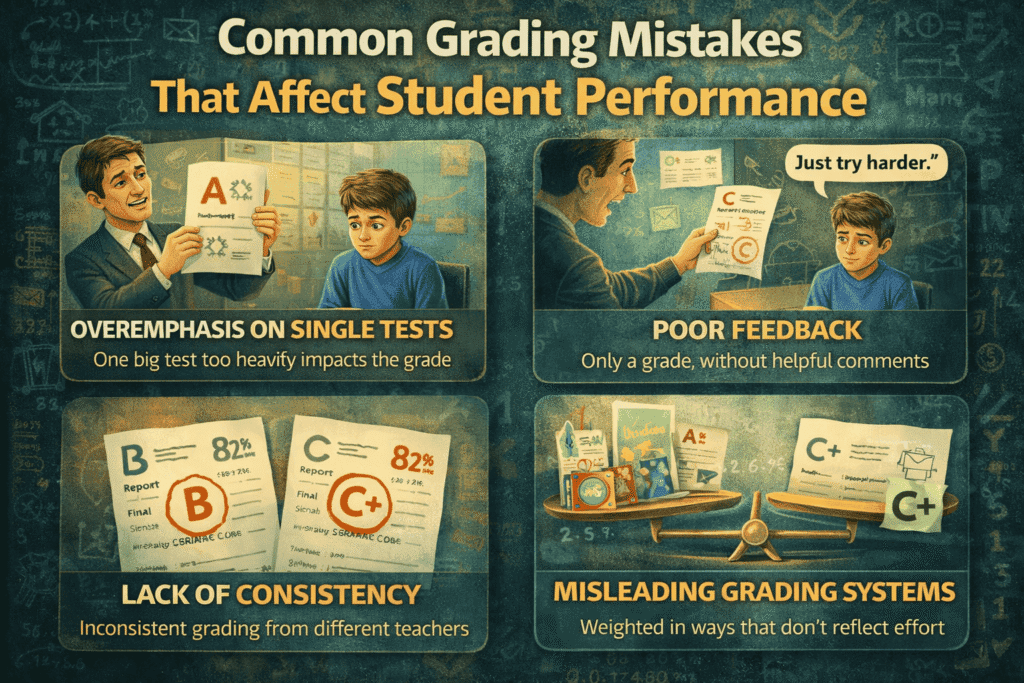
Grades are meant to reflect how well a student understands a subject. But in reality, grading is not always perfect. Small mistakes in how performance is evaluated can create confusion, lower motivation, and even misrepresent a student’s true ability.
Many students assume their grades fully define their performance. However, grading errors and system limitations can significantly affect outcomes without students even realizing it.
This guide explains the most common grading mistakes that impact student performance and what you can do to avoid being affected by them.
Why Grading Mistakes Matter More Than You Think
Grading is not just about marks. It influences:
- Academic confidence
- Future opportunities
- Motivation to learn
- Overall performance trends
👉 Even small inconsistencies in grading can have long term effects.
Understanding these mistakes helps you interpret your results more accurately and make better academic decisions.
Most Common Grading Mistakes That Affect Students
Overemphasis on Final Exams
One of the biggest issues in many systems is placing too much weight on final exams.
This creates problems such as:
- Ignoring consistent effort throughout the semester
- Penalizing students who perform well in coursework
- Increasing pressure on one single test
👉 A single exam should not define your entire performance, but often it does.
Ignoring Continuous Assessment
Assignments, quizzes, and participation are essential parts of learning. But in some cases, they are undervalued or inconsistently graded.
This can lead to:
- Lack of motivation for regular work
- Incomplete evaluation of student ability
- Missed opportunities to improve
👉 Continuous assessment provides a more accurate picture than one time testing.
Inconsistent Grading Standards
Different teachers may evaluate work differently.
This means:
- The same answer could receive different marks
- Grading may depend on subjective judgment
- Students may feel treated unfairly
👉 Lack of standardization creates confusion and inconsistency.
Not Accounting for Improvement
Some grading systems focus only on final results, ignoring progress.
For example:
- A student who improves significantly may not be rewarded
- Early poor performance continues to affect final grades
👉 Improvement is a key part of learning but is often overlooked.
Penalizing Minor Mistakes Too Heavily
In strict grading systems:
- Small errors can lead to large mark deductions
- Minor calculation or formatting mistakes can impact overall scores
👉 This may not reflect actual understanding of the subject.
Lack of Clear Feedback
Grades without feedback do not help students improve.
Common issues include:
- No explanation for lost marks
- Generic or unclear comments
- Lack of guidance for improvement
👉 Without feedback, students repeat the same mistakes.
Comparing Students Instead of Performance
Some systems indirectly compare students against each other rather than evaluating individual understanding.
This can:
- Increase unhealthy competition
- Reduce confidence
- Distort actual performance levels
👉 Performance should be measured individually, not relatively.
How These Mistakes Affect Student Performance
Grading mistakes do more than affect marks. They impact how students learn and grow.
Reduced Motivation
When students feel grading is unfair or unclear, they may:
- Lose interest in studying
- Stop putting in effort
- Feel disconnected from learning
Misleading Academic Evaluation
A student may appear:
- Weaker than they actually are
- Stronger without true understanding
👉 This creates a gap between grades and real ability.
Increased Academic Stress
Unclear grading systems can lead to:
- Anxiety about results
- Pressure to perform perfectly
- Fear of making small mistakes
What Students Can Do to Avoid These Issues
While you cannot control the grading system, you can control how you respond to it.
Focus on Understanding, Not Just Marks
Instead of chasing perfect scores:
- Build strong conceptual understanding
- Practice consistently
- Learn from mistakes
👉 Real learning always matters more than numbers.
Track Your Performance Independently
Do not rely only on final grades.
Using a grade calculator can help you:
- Understand how different components affect your score
- Identify where you are losing marks
- Stay aware of your academic standing
Look at Long Term Performance
Your overall academic progress matters more than one result.
Tracking your performance with a GPA calculator helps you:
- See consistency over time
- Understand your academic trend
- Stay focused on long term improvement
Ask for Feedback
Whenever possible:
- Ask teachers where you lost marks
- Understand your mistakes
- Apply that feedback in future work
👉 Feedback is one of the most powerful tools for improvement.
Stay Consistent Despite System Flaws
Even if the grading system is not perfect:
- Stay disciplined
- Maintain consistent effort
- Focus on improvement
👉 Consistency protects you from grading fluctuations.
The Bigger Picture
No grading system is perfect. Every system has limitations.
But students who:
- Understand how grading works
- Track their performance
- Focus on learning instead of just marks
are able to perform better regardless of these challenges.
Final Thoughts
Grading mistakes can affect student performance, but they do not have to define it.
When you understand the limitations of grading systems and take control of your learning process, you gain a clear advantage.
Focus on growth, stay consistent, and use your results as feedback rather than judgment.
That mindset will help you succeed far beyond any grading system.