
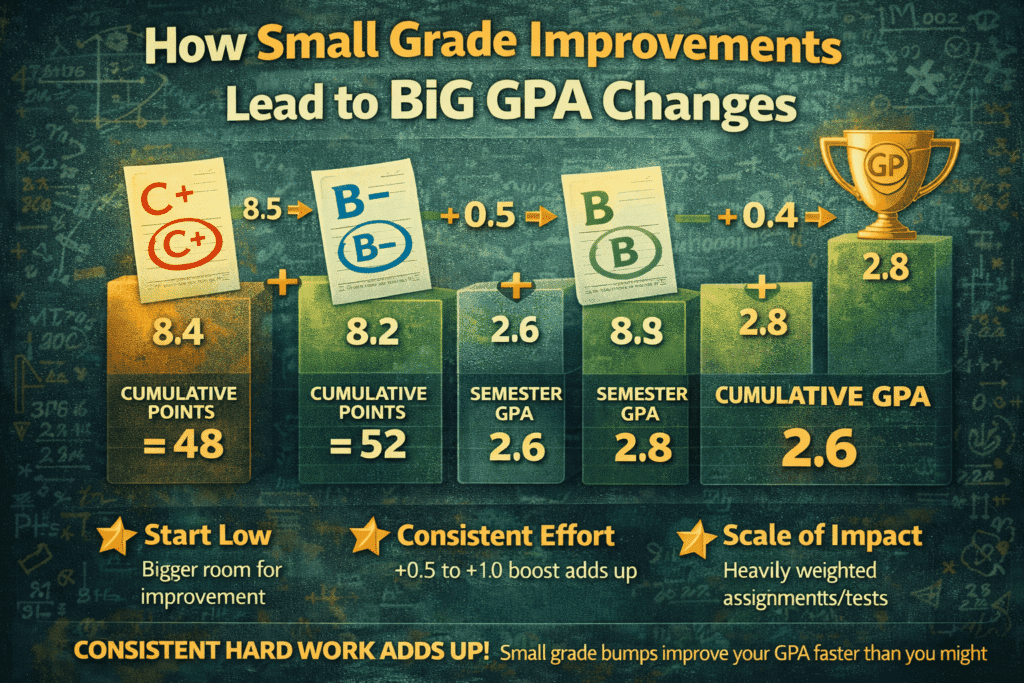
Many students believe that improving GPA requires a dramatic change, such as jumping from average grades to top scores in every subject. That belief often creates pressure and leads to frustration.
In reality, GPA improvement rarely comes from extreme changes. It comes from small, consistent improvements across multiple subjects.
Understanding how these small changes work can completely change the way you approach your academic performance.
Why Small Improvements Matter More Than You Think
GPA is an average. This means every subject and every score contributes to the final number.
Because of this structure, even slight improvements in multiple areas can gradually increase your overall GPA.
For example, improving a few assignments, scoring slightly higher on quizzes, or raising one subject from average to above average may seem minor. But when combined, these changes create measurable impact.
👉 GPA does not require perfection. It responds to consistency.
The Hidden Power of Incremental Progress
Students often overlook the impact of small gains because they focus only on final results.
However, academic performance is built step by step.
When you:
- Improve assignment scores
- Reduce small mistakes
- Stay consistent in multiple subjects
you create a chain reaction that strengthens your overall performance.
Over time, these small improvements compound and push your GPA upward.
Why Students Miss This Opportunity
Many students wait for a “big improvement moment.” They aim to suddenly perform at a much higher level.
This approach usually fails because:
- It creates unrealistic expectations
- It leads to burnout
- It ignores daily performance
The result is inconsistency, which slows down GPA growth.
👉 The real opportunity lies in improving small things consistently, not chasing perfect results.
How GPA Actually Responds to Small Changes
GPA reflects the average of your performance across all courses. This means:
- One subject improvement adds value
- Multiple small improvements multiply the effect
- Consistency stabilizes your overall performance
Even raising your score slightly in several subjects can shift your GPA more effectively than a single high score in one subject.
If you want to understand how these small changes affect your results, using a grade calculator can help you see how individual improvements contribute to your overall performance.
The Role of Consistency in GPA Growth
Consistency is what turns small improvements into long term results.
When you maintain steady effort:
- Your scores become more stable
- Your mistakes decrease
- Your understanding improves
This creates a strong academic pattern, and GPA is designed to reward that pattern.
👉 Consistency is not just helpful. It is the foundation of GPA improvement.
Small Changes That Create Real Impact
Improving your GPA does not require major changes. It requires smart adjustments.
For example:
- Completing assignments on time instead of missing them
- Reviewing mistakes instead of ignoring them
- Preparing consistently instead of cramming
These actions may seem simple, but they directly influence your performance.
Over time, they create a noticeable difference in your results.
Tracking Progress Makes Improvement Visible
One of the biggest reasons students lose motivation is because they cannot see their progress.
Small improvements feel invisible unless you measure them.
Tracking your performance allows you to:
- Stay aware of your current standing
- Identify areas that need improvement
- Stay motivated by visible progress
Using a GPA calculator helps you understand how consistent improvements across subjects are affecting your overall academic performance.
Why One Big Effort Is Not Enough
Many students rely on last minute effort to improve their grades.
While this can help in some cases, it is not a reliable strategy for GPA improvement.
GPA is built over time. It reflects patterns, not isolated performance.
👉 A single strong effort may help temporarily, but consistent effort creates lasting change.
Building a Long-Term Improvement Mindset
To improve your GPA effectively, you need to shift your focus.
Instead of asking:
“How can I get top grades quickly?”
Start asking:
“How can I improve slightly every day?”
This mindset removes pressure and makes progress more achievable.
It also helps you stay consistent, which is the most important factor in long term academic success.
Final Thoughts
Small grade improvements may not seem significant in the moment, but they have a powerful cumulative effect.
When you improve consistently across subjects, reduce mistakes, and maintain steady effort, your GPA naturally increases over time.
The key is to focus on progress, not perfection.
Because in the long run, small improvements are what create big results.